Smith offers an uncanny reading of the latter story, based on the interpretation of a revered 20th-century Polish rabbi. The Piaseczner Rebbe asks provocatively, “If (the great, righteous) Sarah… was unable to bear such pain, how much less so can we?” The rabbi offers the radical suggestion that Sarah “died as a protest to God, in effect telling God, I choose not to live in your world anymore if I have to suffer the way I am suffering. Whatever years are in front of me, I am giving them up.”
For Vayishlah, the portion where Jacob prepares to encounter his brother, Esau, after a 20-year stay in Haran, the midda offered is similarly unconventional – “transforming heel consciousness to face consciousness.” Jacob wrestles with a mysterious figure on the road to meet Esau, but he also “wrestles with his own identity… with who he is or isn’t.” Smith concludes that “the angel blesses him with a name change befitting the success of this existential encounter and marking a paradigm shift in Jacob’s consciousness. The wrestling episode springs Jacob from “heel consciousness” to “face consciousness.”
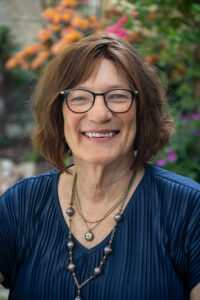
Smith makes reference to some personal life experiences that taught her the importance of second chances. She speaks of people feeling “debarred, diminished, or even less alive than others” in such settings as a Jewish school refusing admission to a child because both parents were of the same gender, or her own deaf daughter who “felt so painfully diminished by traditional communities that she left a Torah-based religious life.” She wonders, “What if, instead, people’s cries for inclusion were compassionately met by affirmations that ‘it’s never too late to be included! You absolutely have a second chance.”
After vezot habracha, the last parasha in the Torah, the book draws to an abrupt close. There is no conclusion – only 14 pages of footnotes and four pages of bibliography, which reminds us just how extensive and meticulous the author is as a researcher and scholar.
My only minor criticism of the book is a purely selfish one. I wish Smith would have written separate chapters for each of the two Torah portions frequently read as double portions in a given year. By treating Tazria-Metzora, Behar-Behukotai and the other five sometimes double parashot as one, the reader is slightly “cheated” – instead of 54 gems, we are treated to only 47 – a small price to pay for a week-by-week chance to learn from Smith’s wisdom!
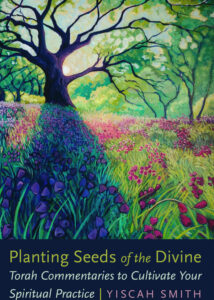
PLANTING SEEDS OF THE DIVINE TORAH COMMENTARIES TO CULTIVATE YOUR SPIRITUAL PRACTICE
By Yiscah Smith
The Jewish Publication Society
340 pages; $24